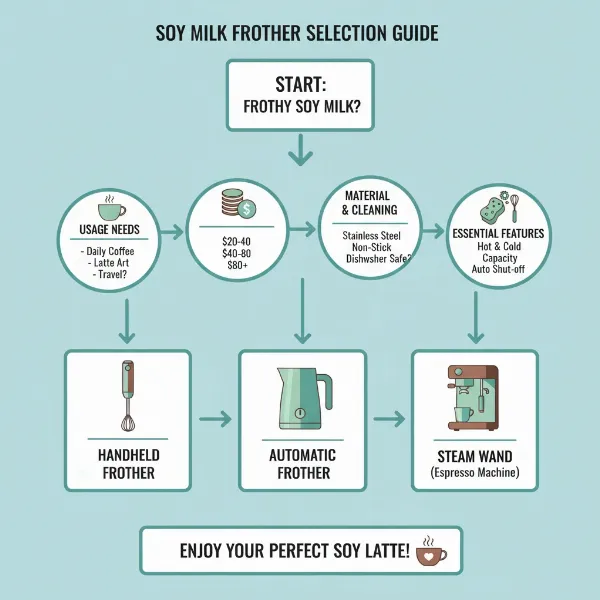
Achieving the perfect cup of coffee is an art, and arguably, the most overlooked element is the milk. While the espresso gets all the glory, expertly steamed milk can transform an ordinary drink into a velvety, sweet, and perfectly balanced experience. But how hot should steamed milk actually be? Getting the temperature wrong can quickly turn your delicious latte or cappuccino into a disappointing, burnt-tasting beverage. This guide will walk you through the optimal temperature range, the science behind it, and practical tips to ensure your steamed milk is always perfect.
Optimal Steamed Milk Temperature: The Golden Range
The consensus among coffee professionals and enthusiasts is that the ideal temperature range for steamed milk typically falls between 150-160°F (65-71°C). [cite: 2_1, 5] Within this range, milk achieves a harmonious balance of sweetness, texture, and creaminess that complements espresso without overpowering it. Many experienced baristas aim for the lower end, around 150-155°F (65-68°C), to best preserve the milk’s natural sweetness and create an excellent texture. [cite: 2_1] For specific drinks like a flat white, some suggest a slightly cooler temperature of 55-60°C (131-140°F) to allow the espresso’s sharper notes to shine through. [cite: 5_2]
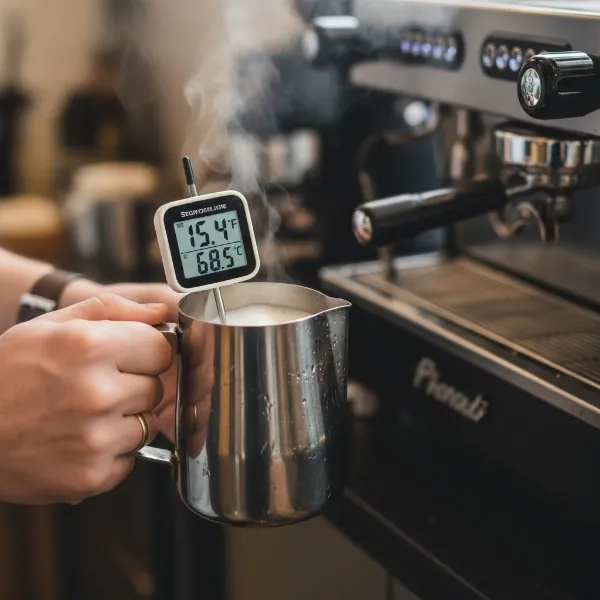 digital thermometer in stainless steel pitcher showing ideal milk temperature range
Why Temperature Matters: The Science Behind the Steam
Understanding the science behind milk steaming reveals why precision in temperature is so crucial for your coffee. Milk contains proteins, fats, and natural sugars (lactose), all of which react to heat in specific ways.
The Impact of Heat on Sweetness and Texture
When milk is heated to the optimal range, two key processes occur:
- Enhanced Sweetness: The natural sugars, primarily lactose, undergo a subtle breakdown into simpler sugars. This process enhances the perceived sweetness of the milk, making your coffee drink more palatable without needing added sugar. [cite: 1_2]
- Velvety Texture (Microfoam): Milk proteins, in their cold state, exist in tightly coiled bundles. As the milk warms, these proteins begin to unfold and aggregate around the tiny air bubbles introduced by the steam wand, forming a stable, silky microfoam. [cite: 2_2] This creates the smooth, luxurious mouthfeel characteristic of a well-made latte or cappuccino.
|
Our Picks for the Best Milk steamer in 2026
As an Amazon Associate I earn from qualifying purchases.
|
||
| Num | Product | Action |
|---|---|---|
| 1 | HAUSHOF Milk Frother, 4-in-1 Electric Milk Frother and Steamer, Large Capacity, Hot Chocolate Maker, Automatic Warm and Cold Foam Maker for Coffee, Latte, Macchiato, Cappuccino |

|
| 2 | Large Electric Milk Frother and Steamer, 16.9oz/500ml Milk Steamer and Frother for Latte or Hot Chocolate, Dishwasher Safe, 6 Functions, Enjoy Perfect Milk Froth in 2 Min (White-Glass) |
|
| 3 | Electric Milk Frother and Steamer, 16.9oz/500ml Milk Steamer and Frother for Latte, Dishwasher Safe, BPA Free, 4 Functions, Enjoy Perfect Milk Froth in 2 Min |
|
| 4 | SIMPLETASTE Milk Frother, 4-in-1 Electric Milk Frother and Steamer, Automatic Warm and Cold Foam Maker and Milk Warmer for Latte, Cappuccinos, Dark Blue |
|
| 5 | SIMPLETASTE Milk Frother, 4-in-1 Electric Milk Steamer, Automatic Warm and Cold Foam Maker and Milk Warmer for Latte, Cappuccinos, Macchiato |
|
| 6 | Milk Frother, 4-in-1 Electric Milk Steamer, 350ml/11.8oz Automatic Frother Machine for Coffee, Warm and Cold Foam, Temperature Control for Latte, Cappuccino, Hot Chocolate |
|
| 7 | Milk Frother and Steamer, Large Capacity & Detachable Electric Milk Frother, Automatic Warm and Cold Foam Maker, Hot Chocolate Maker, Stainless Steel Jug, 30.44Oz./900ML |
|
| 8 | Milk Frother, 4-in-1 Milk Frother and Steamer, 10.6oz Electric Milk Steamer, Automatic Cold and Hot Foam maker for Lattes, Cappuccinos, Ceramic Lining Interior (Polished) |
|
| 9 | SIMPLETASTE Milk Frother, 4-in-1 Electric Milk Steamer, Automatic Warm and Cold Foam Maker and Milk Warmer for Latte, Cappuccinos, Macchiato |
|
| 10 | Milk Frother, Paris Rhône 4-in-1 Milk Steamer and Frother, Hot & Cold Foam Milk Warmer with Temperature Control, Auto Shut-Off Frothers for Coffee, Latte, Cappuccino, Macchiato |
|
The Risks of Overheating: Scalding and Scorching
Exceeding the ideal temperature range can quickly ruin your milk, leading to unpleasant flavors and poor texture.
- “Cooked” or Burnt Flavor: When milk heats beyond 160°F (71°C) and especially above 170°F (77°C), the lactose caramelizes and breaks down further into bitter, acrid compounds. [cite: 1_3, 4_3] This results in a distinctly “cooked” or burnt taste that masks the delicate flavors of your espresso.
- Damaged Proteins and Flat Foam: Excessive heat causes milk proteins to denature (coagulate) completely and break apart. [cite: 1_3, 2_2, 3_3] This destroys the delicate structure needed for microfoam, leading to a thin, watery texture with large, unstable bubbles that quickly dissipate, or even a curdled appearance. Signs of scorched milk include a burnt smell, brownish discoloration, and a metallic taste. [cite: 1_3]
The Problem with Underheating
While overheating is the more common pitfall, milk that isn’t hot enough also compromises your beverage:
- Lack of Sweetness: The natural sugars won’t have adequately broken down, resulting in a less sweet and sometimes bland taste.
- Poor Integration: Underheated milk doesn’t blend as seamlessly with hot espresso, creating a disjointed drinking experience rather than a harmonious one.
- Thin Texture: Insufficient heat can prevent proteins from unfolding correctly, leading to a thinner texture and less stable foam.
“To create perfect steamed milk, temperature is the ultimate balancing act. Too cold, and you lose sweetness and body; too hot, and you’ve scorched the delicate proteins, resulting in a bitter, flat mess.”
How to Achieve the Perfect Steamed Milk Temperature
Achieving the golden temperature range consistently requires a combination of the right tools and proper technique.
Essential Tools
- Milk Thermometer (Digital or Analog): This is your most reliable ally for precision. A clip-on thermometer (analog) or a contactless digital thermometer (for advanced users) allows you to monitor the milk’s temperature in real-time. [cite: 1_1, 2_1]
- Stainless Steel Frothing Pitcher: Stainless steel conducts heat well, allowing you to gauge the temperature by touch and is easy to clean.
Steaming Technique
- Start with Cold Milk: Always begin with fresh, cold milk straight from the refrigerator. This gives you more time to introduce air and develop the texture before the milk gets too hot. [cite: 3_3]
- Position the Steam Wand: Submerge the tip of the steam wand just below the surface of the milk, slightly off-center. This allows you to introduce air effectively (the “stretching” phase) and create a whirlpool effect or “vortex” that incorporates air evenly. [cite: 1_2]
- Introduce Air (Stretching): You’ll hear a gentle “kissing” or “tearing paper” sound as air is introduced. Do this for the first few seconds until the milk volume slightly increases.
- Texture the Milk (Rolling): Submerge the wand slightly deeper to stop introducing air and focus on heating and integrating the existing air into a fine microfoam. The milk should swirl like a miniature tornado. [cite: 1_2]
- Monitor Temperature:
- With a Thermometer: Watch your thermometer carefully. Turn off the steam wand just before it reaches your target temperature (e.g., 145-150°F / 63-65°C), as the milk will continue to heat up by a few degrees after steaming.
- Hand-Feel Method: If you don’t have a thermometer, hold your hand against the side of the pitcher. When it becomes too hot to comfortably hold for more than a couple of seconds, the milk is likely in the ideal range. This method requires practice but can be surprisingly accurate. [cite: 4, 3_3]
- Purge and Wipe: Immediately after steaming, purge your steam wand to clear any milk residue and wipe it clean with a damp cloth. This prevents blockages and maintains hygiene.
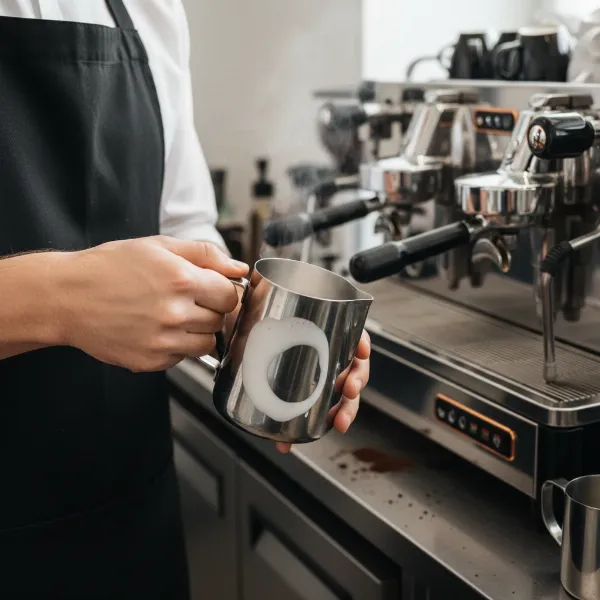 skilled barista steaming milk using espresso machine for perfect latte
Different Milks, Different Temperatures?
While the general principles apply, some milk types benefit from slight temperature adjustments:
- Dairy Milk (Whole, 2%): The 150-160°F (65-71°C) range is standard. Whole milk’s higher fat content provides a richer, more stable foam.
- Skim and Low-Fat Milk: These may benefit from slightly lower temperatures, around 145-155°F (63-68°C), as they can be more prone to overheating and losing texture.
- Oat Milk: Often praised for its frothing capabilities, oat milk generally performs well at 150-155°F (65-68°C). However, some baristas recommend slightly lower, around 130-150°F (54-65°C), to prevent separation or a “grainy” texture. [cite: 1_4, 2_4] Oat milk tends to heat faster than dairy milk, so starting very cold is especially helpful. [cite: 4_4]
Common Steaming Mistakes and How to Fix Them
Even experienced baristas can occasionally run into issues. Here are some common problems related to temperature and how to resolve them:
- Milk is too foamy with large bubbles:
- Cause: Steam wand too close to the surface or too much air introduced during the “stretching” phase. [cite: 3_3]
- Fix: Submerge the wand slightly deeper earlier, reduce aeration time to just a few seconds, and ensure a good vortex is created. [cite: 3_3]
- Milk is flat with no foam:
- Cause: Steam wand submerged too deeply, preventing air from entering, or under-aeration. [cite: 3_3]
- Fix: Start with the wand just below the surface to introduce air, aerate for a full 3-5 seconds, and always use cold, fresh milk. [cite: 3_3]
- Milk tastes burnt or scorched:
- Cause: Over-steaming the milk past the ideal temperature. [cite: 3_3]
- Fix: Use a thermometer or the hand-feel method to stop steaming at 150-155°F (65-68°C). Pay close attention to the temperature during the process. [cite: 3_3]
- Foam is too watery:
- Cause: Overheated milk or improper aeration technique that doesn’t create fine microfoam.
- Fix: Ensure you don’t exceed the optimal temperature range. Focus on creating fine microfoam during the aeration and texturing phases.
Conclusion
Mastering the art of steamed milk temperature is a fundamental skill that elevates your coffee creations from good to exceptional. By aiming for the sweet spot of 150-160°F (65-71°C), you unlock the milk’s natural sweetness and achieve that coveted velvety microfoam. Remember the science: too hot, and you risk a burnt taste and damaged proteins; too cold, and you miss out on flavor and texture. With the right tools, a bit of practice, and a keen eye on the temperature, you’ll consistently craft perfect milk-based beverages.
So, are you ready to transform your daily coffee ritual with perfectly steamed milk?
Frequently Asked Questions
What is the ideal temperature for latte milk?
The ideal temperature for latte milk is generally between 150-155°F (65-68°C). This range brings out the milk’s natural sweetness and creates a smooth, velvety texture that integrates beautifully with espresso, enhancing the overall flavor of your latte.
Can you steam milk twice?
It is not recommended to steam milk twice. Reheating milk that has already been steamed causes the proteins to break down further, resulting in poor texture, a flat foam, and a compromised taste. For the best results, always use fresh, cold milk for each steaming. [cite: 3_2]
What temperature should oat milk be steamed to?
Oat milk generally steams well in the range of 150-155°F (65-68°C). Some sources suggest slightly lower temperatures, around 130-150°F (54-65°C), to prevent separation or scalding, as oat milk can heat up faster than dairy milk. [cite: 1_4, 2_4]
How do I know when my milk is hot enough without a thermometer?
You can use the “hand-feel” method. Hold your hand against the side of the stainless steel frothing pitcher. When it becomes too hot to comfortably hold for more than a few seconds, the milk is likely around 150-155°F (65-68°C), indicating it’s time to stop steaming.