Waking up to the promise of a perfectly frothed latte or cappuccino, only to find your milk frother stubbornly refusing to produce any foam, can be incredibly frustrating. That velvety microfoam is the heart of your favorite coffee beverages, and a flat drink just doesn’t hit the same. If your milk frother is heating the milk but leaving you with a sad, bubbly mess or simply nothing at all, you’re not alone. Many factors can contribute to a frother’s reluctance to perform.
This comprehensive guide will delve into the most common reasons why your milk frother isn’t foaming and provide actionable solutions to get you back to enjoying consistently delicious, frothy drinks. We’ll cover everything from the type of milk you’re using to potential mechanical issues and proper cleaning techniques.
Understanding Your Milk Frother
Before diving into fixes, it helps to understand what a milk frother does and why it’s essential for creating café-quality drinks at home. A milk frother aerates milk, incorporating tiny air bubbles to create a light, stable foam that enhances the texture and flavor of coffee, tea, and hot chocolate. Good froth transforms an ordinary beverage into a luxurious experience, adding creaminess and visual appeal.
Different types of frothers exist, each with its own quirks and common issues:
- Handheld Milk Frothers: These battery-operated wands use a small whisk to create foam. They are compact and affordable but rely heavily on user technique.
- Automatic Milk Frothers: Often electric jugs with an integrated whisk, these offer convenience, heating and frothing milk at the touch of a button. They are popular for home use.
- Integrated Steam Wands: Found on espresso machines, these use high-pressure steam to heat and froth milk simultaneously, offering the most control and producing professional-grade microfoam, but requiring more skill.
While their mechanisms differ, many of the underlying reasons for a lack of foam overlap across these types.
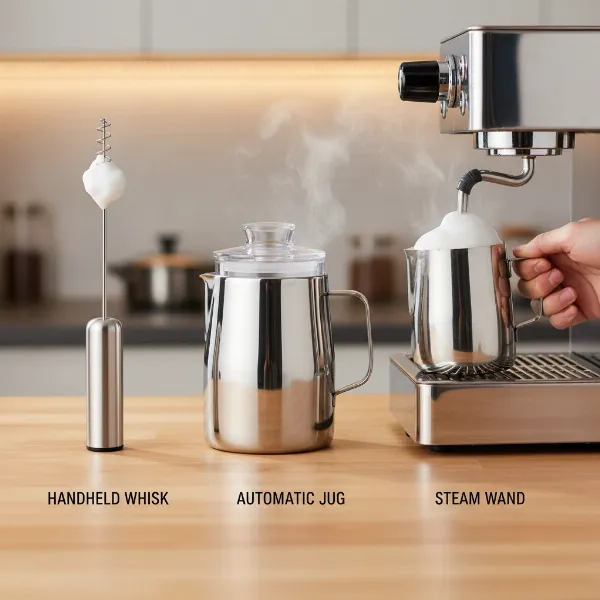 Image showing three common types of milk frothers: handheld, automatic electric, and an espresso machine steam wand.
The Milk Factor: It All Starts with the Right Milk
One of the most overlooked culprits behind poor frothing is the milk itself. Not all milk is created equal when it comes to foam production.
Milk Type Makes a Difference
Whole milk is often considered the gold standard for frothing due to its ideal balance of fat, protein, and sugar. The fat contributes to a rich, creamy texture, while proteins stabilize the air bubbles. Skim or 2% milk can also froth, often producing a lighter, airier foam, but it might be less stable.
For those preferring non-dairy options, the results can vary widely:
- Oat Milk: Many barista-blend oat milks are formulated specifically for frothing and can yield excellent results. Regular oat milk might be less consistent.
- Almond Milk: Some almond milks froth well, particularly barista blends, but homemade or standard versions might produce thinner, less stable foam.
- Soy Milk: Can be challenging to froth consistently, with some brands performing better than others.
- Coconut Milk: Typically produces very little or unstable foam due to its fat content and composition.
|
Our Picks for the Best Milk steamer in 2026
As an Amazon Associate I earn from qualifying purchases.
|
||
| Num | Product | Action |
|---|---|---|
| 1 | SIMPLETASTE Milk Frother, 4-in-1 Electric Milk Steamer, Automatic Warm and Cold Foam Maker and Milk Warmer for Latte, Cappuccinos, Macchiato |

|
| 2 | Milk Frother and Steamer, Large Capacity & Detachable Electric Milk Frother, Automatic Warm and Cold Foam Maker, Hot Chocolate Maker, Stainless Steel Jug, 30.44Oz./900ML |
|
| 3 | Milk Frother, Paris Rhône 4-in-1 Milk Steamer and Frother, Hot & Cold Foam Milk Warmer with Temperature Control, Auto Shut-Off Frothers for Coffee, Latte, Cappuccino, Macchiato |
|
| 4 | SIMPLETASTE Milk Frother, 4-in-1 Electric Milk Steamer, Automatic Warm and Cold Foam Maker and Milk Warmer for Latte, Cappuccinos, Macchiato |
|
| 5 | Electric Milk Frother and Steamer, 16.9oz/500ml Milk Steamer and Frother for Latte, Dishwasher Safe, BPA Free, 4 Functions, Enjoy Perfect Milk Froth in 2 Min |
|
| 6 | SIMPLETASTE Milk Frother, 4-in-1 Electric Milk Frother and Steamer, Automatic Warm and Cold Foam Maker and Milk Warmer for Latte, Cappuccinos, Dark Blue |
|
| 7 | HAUSHOF Milk Frother, 4-in-1 Electric Milk Frother and Steamer, Large Capacity, Hot Chocolate Maker, Automatic Warm and Cold Foam Maker for Coffee, Latte, Macchiato, Cappuccino |
|
| 8 | Large Electric Milk Frother and Steamer, 16.9oz/500ml Milk Steamer and Frother for Latte or Hot Chocolate, Dishwasher Safe, 6 Functions, Enjoy Perfect Milk Froth in 2 Min (White-Glass) |
|
| 9 | Milk Frother, 4-in-1 Milk Frother and Steamer, 10.6oz Electric Milk Steamer, Automatic Cold and Hot Foam maker for Lattes, Cappuccinos, Ceramic Lining Interior (Polished) |
|
| 10 | Milk Frother, 4-in-1 Electric Milk Steamer, 350ml/11.8oz Automatic Frother Machine for Coffee, Warm and Cold Foam, Temperature Control for Latte, Cappuccino, Hot Chocolate |
|
If you’re struggling, try experimenting with different brands and types of milk, particularly those marketed as “barista” versions.
Temperature and Freshness are Key
Milk must be cold and fresh for optimal frothing. Cold milk provides a longer working window, allowing more air to be incorporated before it heats up and destabilizes the protein structure responsible for foam. Using milk straight from the refrigerator is always recommended.
Additionally, older milk or milk that has been opened for a few days may not froth as effectively. Even seemingly minor changes in a milk’s composition, like those found in some organic varieties, can surprisingly affect its ability to foam. If your frother suddenly stops working with your usual milk, try a fresh carton from a different brand.
Quantity Matters
Whether you’re using an automatic frother or a steam wand, using too much or too little milk can impede frothing. Overfilling an automatic frother can lead to overflow or insufficient aeration, as there isn’t enough space for the milk to expand. Too little milk might not allow the whisk or steam wand to create the necessary turbulence. Always adhere to the minimum and maximum fill lines on your device.
Cleanliness is Key: A Dirty Frother Won’t Froth
Many frothing problems can be traced back to a lack of thorough cleaning. Dried milk residue is a formidable foe to foam.
Residue Buildup and Blockages
Milk contains proteins and fats that, when heated and dried, can form stubborn residue.
- Whisk/Container: In automatic frothers, dried milk on the whisk or inside the container can prevent the whisk from spinning freely or properly aerating the milk. It can also create an uneven surface that hinders foam formation.
- Steam Wands: For espresso machine steam wands, milk residue can easily clog the tiny air intake holes or the nozzle itself, preventing steam from effectively aerating the milk. This results in weak steam pressure and no foam.
- Metal Connectors: On automatic frothers with a base station, gunk or residue on the metal contacts can interfere with the electrical connection, causing the frother to not heat or spin correctly.
Cleaning Frequency and Methods
- After Every Use: Rinse all milk-contacting parts with cold water immediately after each use. This prevents milk from drying and hardening.
- Regular Deep Cleaning: For automatic frothers, regularly disassemble and wash the whisk and inside of the jug with warm, soapy water. Use a small brush or sponge to remove any stubborn residue. Pay special attention to the metal connectors on the frother and its base, cleaning them with soap and water, then isopropyl alcohol if needed.
- Steam Wand Maintenance: For espresso machine wands, purge the wand immediately after frothing to clear out any milk. Wipe the wand down with a damp cloth. Periodically, fully disassemble the steam tip and soak it in a solution of warm water and a milk frother cleaner or descaling solution to clear any internal blockages. Ensure the air intake holes are clear. For integrated frothers, descale the machine regularly and use its “clean” cycles.
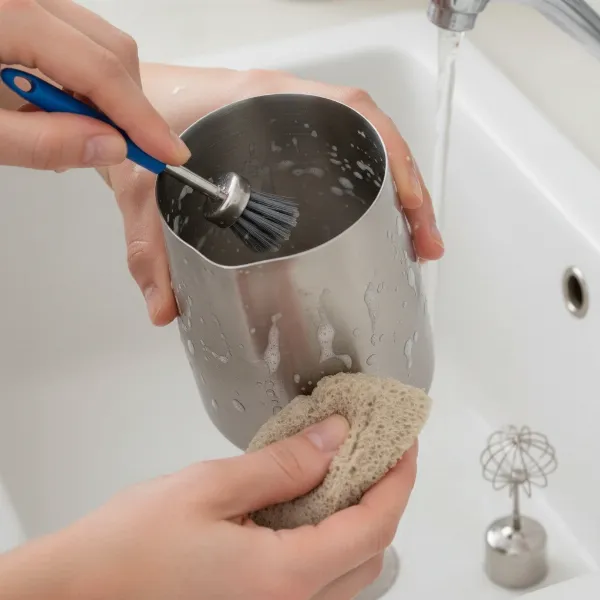 Person cleaning an automatic milk frother whisk and jug with soap and water to remove dried milk residue.
Machine Malfunction: When the Frother Itself is the Problem
Sometimes, the issue lies with the frother’s components.
Power and Electrical Issues
- Not Plugged In/Loose Connection: The simplest fix is often the easiest to overlook. Ensure your automatic frother is securely plugged into a working power outlet and that the base is making proper contact with the jug.
- Battery Issues (Handheld): For handheld frothers, weak or dead batteries are a common cause of poor performance. Replace them with fresh ones.
- Overheating Protection: Many automatic frothers have a safety mechanism that prevents them from operating if they are too hot, often after back-to-back uses. Allow the frother to cool down completely between uses. Rinsing with cold water can help speed this up.
Whisk or Spinning Mechanism Problems
- Missing or Damaged Whisk: For automatic frothers, ensure the whisk is present, correctly seated on its spindle, and not bent or damaged. A warped or broken whisk won’t generate proper foam. Replacement whisks are often available from the manufacturer.
- Motor Issues: In rare cases, the motor driving the whisk might be failing. If you hear the frother trying to spin but it’s sluggish or not moving at all, and all other checks pass, a faulty motor could be the culprit. This usually requires professional repair or replacement.
Steam Wand Specific Issues
- Blocked Nozzle/Air Intake: As mentioned under cleanliness, a clogged steam wand tip or air intake prevents proper aeration.
- Low Steam Pressure: If your espresso machine’s steam wand produces weak steam, it won’t be able to froth milk effectively. This can be due to:
- Scale Buildup: Limescale can restrict water flow to the boiler, reducing steam pressure. Regular descaling is crucial.
- Internal Leaks or Malfunctions: More complex internal issues might require professional servicing.
- O-Rings: For removable steam wands, damaged or missing o-rings can cause steam to escape, reducing pressure.
User Technique: Mastering the Art of Frothing
While automatic frothers minimize the need for technique, handheld frothers and especially steam wands require a specific approach to achieve perfect foam.
Handheld Frother Technique
- Angle and Depth: Insert the whisk just below the surface of the milk, at a slight angle. This creates a vortex that incorporates air. Slowly move the whisk up and down, keeping it just beneath the surface to introduce air, then submerge it slightly deeper to mix the foam into the milk for a more uniform texture.
- Duration: Don’t under-froth or over-froth. Froth until you reach the desired volume and consistency, typically a few seconds for aeration and then a bit longer for mixing.
Steam Wand Technique
- Positioning: Submerge the steam tip just below the surface of cold milk, off-center.
- Aeration (Stretching): Open the steam valve fully. You should hear a gentle “hissing” sound as air is incorporated. Keep the tip at the surface until the milk volume increases by about 20-30%.
- Texturing (Rolling): Submerge the tip deeper into the milk. The milk should swirl in a continuous, rolling motion (the “vortex”). This breaks down large bubbles into fine microfoam, creating a silky texture.
- Temperature: Stop steaming when the pitcher becomes too hot to comfortably hold. The ideal milk temperature for frothing is typically between 140-150°F (60-65°C). Overheating will diminish the foam quality and burn the milk.
“To achieve the ultimate milk froth, the temperature of your milk is paramount. Always ensure your milk is perfectly cold before you begin the frothing process.”
Quick Fixes and Preventative Measures
Here’s a checklist for immediate troubleshooting and ongoing maintenance:
- Check Power: Is it plugged in? Are the batteries fresh?
- Clean Thoroughly: Inspect and clean the whisk, jug interior, metal contacts, and any steam wand nozzles or air intakes.
- Use Cold, Fresh Milk: Always start with refrigerated milk. Experiment with different brands or types if your usual one isn’t working.
- Check Whisk/Components: Ensure the whisk is properly attached and undamaged.
- Allow Cooling: If using an automatic frother multiple times, let it cool down between uses.
- Review Technique: For manual frothers or steam wands, re-evaluate your angle, depth, and duration.
- Descaling (Espresso Machines): Regularly descale your espresso machine if using a steam wand.
Conclusion
A malfunctioning milk frother can put a damper on your daily coffee ritual, but most issues are easily resolved with a bit of troubleshooting. By paying attention to the type and temperature of your milk, maintaining impeccable cleanliness, and ensuring your device is in good working order, you can almost always bring your frother back to life. Don’t let a flat latte deflate your spirits! With these tips, you’ll be creating rich, creamy, and delightful foam in no time.
What’s your go-to trick for achieving perfect milk froth every time?
Frequently Asked Questions
Which type of milk frother is best for beginners?
For beginners, an automatic milk frother is often the best choice. These devices simplify the frothing process by heating and aerating milk at the touch of a button, requiring minimal technique and delivering consistent results, making them ideal for those new to crafting specialty coffee drinks at home.
Can I froth non-dairy milk effectively?
Yes, you can froth non-dairy milk, but results vary significantly by type and brand. Barista-blend oat and almond milks are specifically formulated to create stable and creamy foam, often rivaling dairy milk. Other non-dairy options may produce less consistent or thinner foam. Always start with cold, fresh non-dairy milk for the best chance of success.
How often should I clean my milk frother?
You should rinse your milk frother’s milk-contacting parts with cold water immediately after every use to prevent milk residue from drying. A thorough cleaning with warm, soapy water should be done regularly, ideally daily or after a few uses, paying close attention to the whisk, interior, and any connectors or nozzles to prevent buildup that can hinder performance.