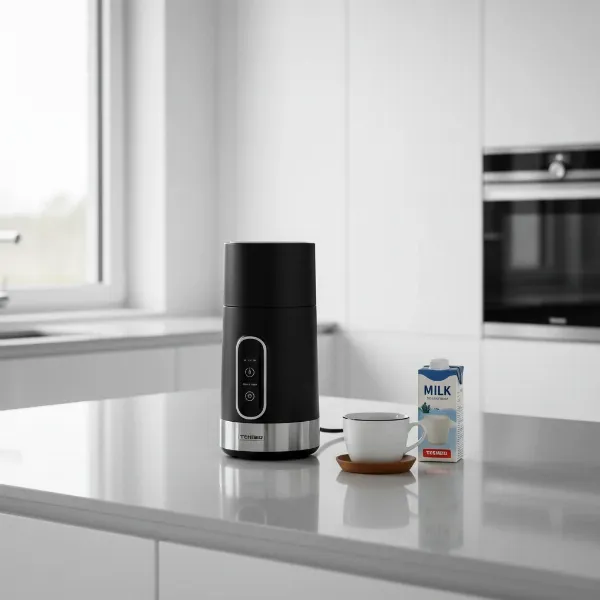
Imagine starting your day with a perfectly frothed latte or winding down with a rich hot chocolate, all made precisely to your liking. For coffee enthusiasts and home baristas, a quality milk frother is an essential tool, but one with temperature control settings takes your beverage game to an entirely new level. These advanced devices offer unparalleled customization, ensuring your milk is always at the ideal warmth and consistency for any drink, from a silky microfoam latte to an extra-hot cappuccino.
What is a Milk Frother with Temperature Control and Why You Need One
A milk frother with temperature control is an electric appliance designed not only to whip milk into a creamy foam but also to heat it to a specific, user-selected temperature. Unlike basic frothers that offer a single hot or cold setting, these sophisticated models provide a range of temperature options, often via a dial or multiple preset buttons. This precision is paramount for crafting café-quality beverages at home.
Why is this level of control so crucial? The temperature of your milk directly impacts its texture, sweetness, and the overall enjoyment of your drink. Too hot, and the milk can taste scalded or thin; too cold, and it won’t properly integrate with your coffee. Precise temperature control allows the milk proteins to denature optimally, creating that stable, velvety microfoam coveted by baristas. Whether you prefer your latte just warm or your hot cocoa extra hot, a frother with adjustable temperature settings ensures every sip is perfect. It’s the key to consistent results and unlocking the full potential of your favorite milky concoctions.
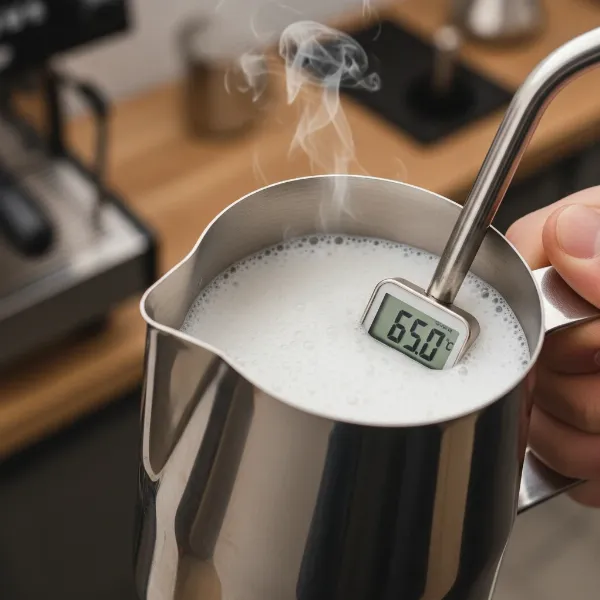 Close-up of milk frothing in a pitcher, showing fine bubbles and steam, with a thermometer for temperature control.
Types of Milk Frothers: Focusing on Temperature Control
When it comes to frothers offering temperature control, you’re primarily looking at automatic countertop frothers. While handheld models are popular for their portability and affordability, they generally lack a heating element and therefore cannot control temperature directly; you’d need to heat your milk separately before frothing.
Automatic Countertop Frothers
These are the stars of the show when it comes to temperature control. Automatic countertop frothers feature an integrated heating element and a whisk or impeller that creates foam. They are designed for convenience, often operating with the press of a button and shutting off automatically once the desired temperature and froth consistency are achieved.
How They Work: Most models use an induction heating system or a heating plate at the base of the pitcher. A magnetic whisk at the bottom rapidly spins the milk, incorporating air while it heats. The temperature sensor monitors the milk’s warmth, stopping the process when the selected temperature is reached.
Advantages:
- Consistent Results: Deliver reliable foam texture and temperature every time.
- Hands-Free Operation: Simply add milk, select settings, and let the machine do the work.
- Integrated Heating: No need for a separate saucepan or microwave.
- Precise Temperature Control: Offers specific temperature dials or multiple heat settings (cold, warm, hot, extra hot).
- Versatility: Many can create different foam types (latte, cappuccino) and handle various milk types, including non-dairy options.
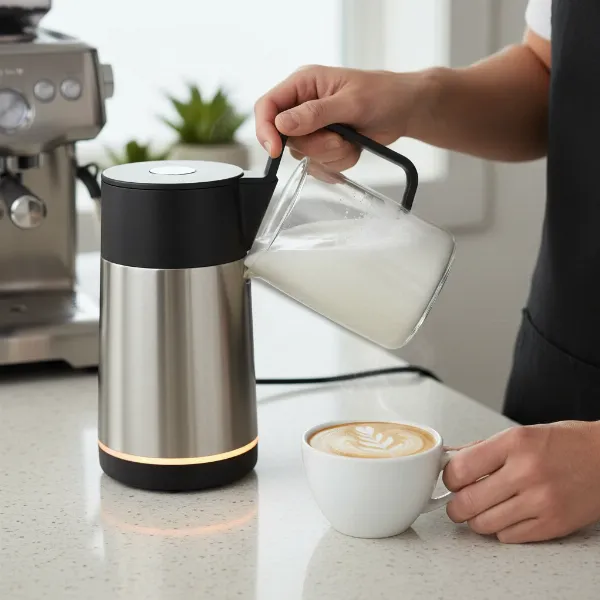 Automatic countertop milk frother preparing frothed milk for a latte, with a barista pouring milk into a cup.
Disadvantages:
- Size: Generally larger than handheld models, requiring dedicated counter space.
- Cost: Tend to be more expensive due to advanced features.
- Cleaning: While many have non-stick interiors or dishwasher-safe pitchers, the heating base usually needs careful handwashing.
|
Our Picks for the Best Milk steamer in 2026
As an Amazon Associate I earn from qualifying purchases.
|
||
| Num | Product | Action |
|---|---|---|
| 1 | Milk Frother, 4-in-1 Electric Milk Steamer, 350ml/11.8oz Automatic Frother Machine for Coffee, Warm and Cold Foam, Temperature Control for Latte, Cappuccino, Hot Chocolate |

|
| 2 | SIMPLETASTE Milk Frother, 4-in-1 Electric Milk Steamer, Automatic Warm and Cold Foam Maker and Milk Warmer for Latte, Cappuccinos, Macchiato |
|
| 3 | Milk Frother, 4-in-1 Milk Frother and Steamer, 10.6oz Electric Milk Steamer, Automatic Cold and Hot Foam maker for Lattes, Cappuccinos, Ceramic Lining Interior (Polished) |
|
| 4 | Electric Milk Frother and Steamer, 16.9oz/500ml Milk Steamer and Frother for Latte, Dishwasher Safe, BPA Free, 4 Functions, Enjoy Perfect Milk Froth in 2 Min |
|
| 5 | SIMPLETASTE Milk Frother, 4-in-1 Electric Milk Steamer, Automatic Warm and Cold Foam Maker and Milk Warmer for Latte, Cappuccinos, Macchiato |
|
| 6 | SIMPLETASTE Milk Frother, 4-in-1 Electric Milk Frother and Steamer, Automatic Warm and Cold Foam Maker and Milk Warmer for Latte, Cappuccinos, Dark Blue |
|
| 7 | Milk Frother and Steamer, Large Capacity & Detachable Electric Milk Frother, Automatic Warm and Cold Foam Maker, Hot Chocolate Maker, Stainless Steel Jug, 30.44Oz./900ML |
|
| 8 | Large Electric Milk Frother and Steamer, 16.9oz/500ml Milk Steamer and Frother for Latte or Hot Chocolate, Dishwasher Safe, 6 Functions, Enjoy Perfect Milk Froth in 2 Min (White-Glass) |
|
| 9 | HAUSHOF Milk Frother, 4-in-1 Electric Milk Frother and Steamer, Large Capacity, Hot Chocolate Maker, Automatic Warm and Cold Foam Maker for Coffee, Latte, Macchiato, Cappuccino |
|
| 10 |
|
|
Examples: The Breville Milk Cafe and Instant Pot Instant MagicFroth are prime examples of countertop frothers renowned for their temperature control capabilities.
Handheld Frothers (A Brief Contrast)
While not offering integrated temperature control, handheld frothers are worth a brief mention to differentiate. These battery-operated wands are compact and excellent for quickly whipping up foam from pre-heated or cold milk. They’re great for beginners or those with limited space, but remember, any heating must be done separately. If precise temperature is your priority, an automatic countertop model is the way to go.
Key Features to Look for in Temperature-Controlled Frothers
Choosing the best temperature-controlled milk frother involves more than just picking the first model you see. Consider these crucial features to ensure it meets your specific needs:
- Precise Temperature Settings: Look for frothers that offer a wide range of temperature options. Some provide a continuous dial (like the Breville Milk Cafe, which can go from 100°F to over 160°F), allowing you to fine-tune the warmth to your exact preference. Others have distinct preset buttons (e.g., cold, warm, hot), which are easier to use for consistent results if you have standard preferences.
- Multiple Foam Settings: Beyond temperature, the ability to customize foam texture is a significant plus. Many advanced frothers come with interchangeable whisk attachments—one for a finer, denser microfoam ideal for lattes and latte art, and another for an airier, thicker foam perfect for cappuccinos or dolloping on hot chocolate. A dedicated cold foam setting is also valuable for iced beverages.
- Capacity: Consider how many drinks you typically make at once. Capacities can range from 10 ounces (suitable for one or two servings) to 25 ounces (great for a family or entertaining guests). Larger capacities are convenient but also mean a larger footprint on your counter.
- Ease of Cleaning: Milk can be sticky and prone to burning onto surfaces. Look for models with non-stick interiors and, ideally, a detachable pitcher that is dishwasher-safe. Easy cleaning is a major factor in how often you’ll actually use your frother. Models with hard-to-reach crevices or non-detachable pitchers can be a chore to maintain.
- Milk Versatility: If you enjoy experimenting with different milk types, ensure your chosen frother performs well with both dairy and various non-dairy alternatives like oat, almond, soy, or coconut milk. Some frothers, like the Breville Milk Cafe, are specifically praised for their excellent performance with plant-based milks, consistently producing quality foam.
- Additional Features: Keep an eye out for extras like automatic shut-off for safety and convenience, quiet operation for early mornings, a well-designed pour spout to minimize drips, and integrated storage for whisks or power cords. These small details can significantly enhance your user experience.
Top Milk Frothers with Temperature Control Settings
Based on extensive testing and user reviews, two models consistently stand out for their excellent temperature control and frothing capabilities:
Breville Milk Cafe Frother
The Breville Milk Cafe is often hailed as a premium choice for its precision and performance.
- Key Features: It boasts a unique temperature dial, allowing you to select anything from a cold stir to an extra-hot 160°F. It includes two interchangeable whisk attachments—a “latte” disc for smooth, creamy microfoam and a “cappuccino” disc for denser, airier foam. With a generous 25-ounce capacity, it can prepare multiple drinks simultaneously. The pitcher is dishwasher-safe, making cleanup relatively easy, though the base requires handwashing.
- Pros:
- Exceptional Temperature Customization: The variable dial offers unmatched control over milk temperature.
- Versatile Foam Quality: Two distinct whisks ensure you get the perfect foam for any drink, from lattes to cappuccinos.
- Excellent with Alternative Milks: Known for producing high-quality foam with various plant-based milks.
- Large Capacity: Ideal for households that enjoy several milk-based beverages.
- User-Friendly Design: Simple dial, start/stop button, and convenient magnetic storage for the unused whisk.
- Cons:
- Higher Price Point: It’s a significant investment compared to more basic models.
- Base Requires Handwashing: The electronic base cannot be submerged.
- Cleaning Can Be Intricate: The lid breaks down into multiple pieces, adding a slight chore to cleaning.
Instant Pot Instant MagicFroth (9-in-1 or 4-in-1)
The Instant Pot MagicFroth series offers impressive functionality and value, making it a strong contender for those seeking versatile temperature and foam options without the premium price tag.
- Key Features: The MagicFroth 9-in-1 provides three temperature settings (cold, warm, hot) and three foam settings (stir only, latte, cappuccino), offering nine combinations. The Instant Pot 4-in-1 has four dedicated settings (cold foam, warm latte foam, warm cappuccino foam, hot milk) with consistent temperature outputs (e.g., 145°F for warm, 165°F for hot). Most models feature a sleek interface and a dishwasher-safe removable pitcher for easy cleaning.
- Pros:
- Multiple Temperature and Foam Options: Highly versatile for a range of drinks and preferences.
- Excellent Value: Offers advanced features at a more approachable price point.
- Good Foam Quality: Produces silky, velvety microfoam that holds its texture well, even with oat milk.
- Easy to Use: Intuitive interfaces with clear buttons.
- Dishwasher-Safe Pitcher (on some models): Simplifies cleanup.
- Cons:
- Processing Time: Some cycles, particularly for heating and frothing, can take up to five minutes.
- Capacity Varies: The 4-in-1 has a smaller 10-ounce capacity, while the 9-in-1 offers 17 ounces.
- Minor Design Quirks: Some models have hard-to-read fill lines or may show smudges easily.
How to Use and Care for Your Temperature-Controlled Frother
To get the most out of your temperature-controlled milk frother and ensure its longevity, follow these tips:
Best Practices for Frothing
- Start with Cold, Fresh Milk: For optimal frothing, always use cold milk straight from the refrigerator. Cold milk gives the frother more time to incorporate air before it reaches the ideal heating temperature, resulting in a finer, more stable foam.
- Choose the Right Milk: While most frothers handle various milk types, whole milk generally produces the richest, most stable foam due to its fat content. Skim milk creates more voluminous but often lighter, drier foam. For plant-based milks, look for “barista blend” versions, which are formulated to froth better.
- Don’t Overfill: Adhere to the minimum and maximum fill lines indicated inside your frother’s pitcher. Overfilling can lead to spills and uneven frothing, while underfilling might not produce enough foam.
- Select Appropriate Settings: Match your temperature and foam settings to your desired drink. A latte typically requires a finer, wetter microfoam at around 140-150°F, while a cappuccino benefits from a drier, airier foam at a similar temperature. For cold foam, ensure your frother has a dedicated cold setting.
- Pour Immediately: Once the frothing cycle is complete, pour your frothed milk into your beverage right away. This prevents the foam from separating from the liquid milk.
Cleaning and Maintenance
- Clean After Every Use: This is perhaps the most crucial tip. Milk can quickly dry and form a stubborn film, especially on heated surfaces. Rinse the pitcher with warm water immediately after pouring, and wipe it with a soft cloth.
- Dishwasher-Safe Components: If your frother has a detachable, dishwasher-safe pitcher (like the Breville Milk Cafe or Instant Pot MagicFroth 9-in-1), utilize this feature for thorough cleaning. Always check the manufacturer’s instructions.
- Handwash the Base: The electronic base of countertop frothers should never be submerged in water. Wipe it clean with a damp cloth, ensuring no moisture enters the electrical components.
- Avoid Abrasive Cleaners: Use mild dish soap and a soft sponge or cloth. Abrasive scrubbers can damage non-stick coatings or stainless steel finishes. For narrow pitchers, a bottle brush can be helpful.
Troubleshooting Common Issues
- Frother Not Creating Foam/Loosely Frothed Milk:
- Cause: Milk might not be cold enough, incorrect milk type (e.g., very low-fat plant milk not designed for frothing), or pitcher is overfilled/underfilled.
- Fix: Use fresh, cold milk. Try a different milk type (e.g., whole dairy milk or a barista blend non-dairy). Adjust milk volume to within min/max lines.
- Milk Not Heating Properly:
- Cause: Incorrect temperature setting, power issue, or heating element malfunction.
- Fix: Double-check your temperature selection. Ensure the frother is properly plugged in. If problems persist, consult the user manual or manufacturer’s support.
- Cooked Milk Film at the Bottom:
- Cause: Not cleaning immediately after use, or milk being heated too high for too long.
- Fix: Clean immediately. For stuck-on milk, soak the pitcher in warm, soapy water for a few minutes before gently scrubbing.
Conclusion
Investing in a milk frother with temperature control settings is a game-changer for anyone passionate about crafting exquisite beverages at home. These sophisticated devices empower you to achieve barista-quality results, giving you the precision to control warmth and foam texture for everything from a delicate latte to a rich hot chocolate. By understanding the key features, exploring top models like the Breville Milk Cafe and Instant Pot MagicFroth, and following proper usage and care guidelines, you can elevate your daily coffee ritual.
The perfect frothed milk isn’t just about bubbles; it’s about the creamy mouthfeel, the subtle sweetness, and the ideal temperature that completes your drink. Are you ready to take command of your concoctions and transform your home into your favorite café?
Frequently Asked Questions
What is the ideal temperature for frothing milk?
The generally accepted ideal temperature range for frothing milk is between 140°F (60°C) and 155°F (68°C). Within this range, milk achieves optimal sweetness and a velvety texture without tasting scalded. Many frothers with temperature control allow you to choose your preferred warmth within or even beyond this range for customized beverages.
Can I use plant-based milk in a temperature-controlled frother?
Absolutely! Most modern temperature-controlled frothers are designed to work well with various plant-based milks, including oat, almond, soy, and coconut. For the best results, consider using “barista blend” versions of non-dairy milks, as they often contain stabilizers that help create a more consistent and lasting foam. The Breville Milk Cafe, for instance, is noted for its excellent performance with alternative milks.
How often should I clean my milk frother?
You should clean your milk frother immediately after every single use. This prevents milk residue from drying and hardening, which can be difficult to remove and can also harbor bacteria. A quick rinse and wipe-down are usually sufficient for daily maintenance, with more thorough cleaning (like using a dishwasher for detachable parts) as needed.
Are temperature-controlled frothers worth the investment?
If you frequently enjoy lattes, cappuccinos, hot chocolates, or other milk-based drinks and value consistency, customization, and café-quality results, a temperature-controlled frother is definitely worth the investment. The ability to precisely adjust milk temperature and foam texture significantly enhances the flavor and experience of your beverages compared to basic frothers or manual methods.