Ever wonder how your local coffee shop crafts those velvety lattes with beautiful art on top? The secret isn’t some unobtainable, high-tech gadget. Often, it comes down to a humble, yet crucial tool. If you’re asking yourself, What Is A Frothing Pitcher, you’re on the right track to unlocking cafe-quality coffee at home. It’s the unsung hero of the coffee bar, the artist’s brush for the milk-and-espresso canvas. Let’s dive into why this simple piece of metal is your ticket to a better morning brew.
So, What Exactly Is a Frothing Pitcher and Why Do I Need One?
A frothing pitcher is a specially designed container, typically made of stainless steel, used for steaming and frothing milk with an espresso machine’s steam wand. It’s purpose-built to help you create the perfect microfoam—that silky, smooth, and finely textured milk essential for lattes, cappuccinos, and flat whites.
Think of it this way: you wouldn’t try to paint a masterpiece with a garden spade, would you? The same logic applies here. While you could try to steam milk in a regular mug or measuring cup, you’d be fighting a losing battle. A proper frothing pitcher gives you three critical advantages:
- Temperature Control: Stainless steel is an excellent conductor of heat, allowing you to feel the milk’s temperature with your hand. This tactile feedback is crucial to avoid scalding the milk, which kills its sweetness and ruins the foam.
- The Perfect Vortex: The shape of the pitcher is designed to help you create a swirling vortex when steaming. This whirlpool effect is what breaks down large air bubbles and incorporates them into the milk, resulting in that coveted silky microfoam instead of a bubbly, stiff foam.
- Pouring Precision: The most defining feature is the spout. A well-designed spout is essential for control when pouring, allowing you to create intricate latte art, from a simple heart to a complex rosetta.
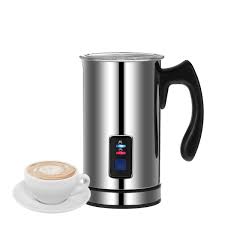
Breaking Down the Frothing Pitcher: More Than Just a Jug
At first glance, it looks like a simple metal jug. But every curve and feature serves a purpose.
- Stainless Steel Body: The go-to material for a reason. It’s durable, easy to clean, and as mentioned, provides that all-important temperature feedback.
- The Spout: This is the business end. A sharp, defined spout is ideal for detailed latte art, while a more rounded spout is forgiving for beginners and great for classic cappuccinos.
- The Handle: An open-ended handle provides a secure grip and keeps your fingers away from the hot metal.
- Volume Markings: Many pitchers have etched volume markings inside, which is a fantastic feature for consistency. Using the same amount of milk every time is key to repeatable results.
How to Use a Frothing Pitcher Like a Pro: A Step-by-Step Guide
Ready to turn cold milk into liquid velvet? Grab your frothing pitcher and your espresso machine. It might take a few tries to get the hang of it, but once you do, you’ll never look back.
- Start Cold: For the best results, always start with a cold pitcher and cold milk. Some pros even store their pitchers in the fridge. Fill the pitcher with milk up to the base of the spout—this usually leaves enough room for the milk to expand without overflowing.
- Purge the Wand: Before you begin, point your steam wand into the drip tray and turn it on for a couple of seconds. This clears out any condensed water.
- Position the Wand: Submerge the tip of the steam wand just below the surface of the milk, slightly off-center. This position is key to starting the vortex.
- Aerate the Milk (Stretching): Turn the steam wand on full power. You should hear a gentle “tss-tss-tss” or hissing sound. This is the sound of air being introduced into the milk. Keep the tip near the surface to incorporate air until the milk has expanded by about 30-50% and the pitcher feels lukewarm.
- Incorporate the Air (Texturing): Now, lower the wand deeper into the milk, positioning it to create a strong, swirling vortex. This is the magic moment where those larger bubbles are broken down and integrated, creating silky microfoam. Keep this vortex going until the outside of the pitcher is hot to the touch—but not so hot you have to pull your hand away immediately (around 140-150°F or 60-65°C).
- Turn Off and Wipe: Turn the steam off before removing the wand from the milk. Immediately wipe the wand with a damp cloth to remove milk residue.
- Groom the Milk: You’re almost there! Tap the bottom of the pitcher firmly on the counter a couple of times to pop any large surface bubbles. Then, swirl the milk in the pitcher for about 20-30 seconds. It should have the look of wet paint or melted ice cream.
- Pour Immediately: Your perfect microfoam is ready. Pour it into your espresso and enjoy your creation.
Secrets from the Pros: Tips for Perfect Milk Every Time
Getting consistent results is what separates the novices from the home baristas. Here are a few insider tips to elevate your milk game.
What’s the Best Milk to Use?
The type of milk you use dramatically impacts the final result. Whole milk is the easiest to work with for beginners due to its high fat and protein content, which creates a rich, stable, and forgiving foam. However, you can achieve great results with others:
- Skim Milk: Creates a lot of stiff, dry foam but lacks the creamy texture of whole milk.
- Oat Milk (Barista Edition): The champion of plant-based milks. Barista blends are formulated with added oils and emulsifiers to steam beautifully, creating a texture very similar to whole milk.
- Soy and Almond Milk: Can be tricky. They tend to curdle at high temperatures and produce a thinner foam. Look for barista-specific versions for better luck.
Why Is Temperature So Important?
Steaming milk is a science. When you heat it, the milk proteins begin to unravel and form a structure around the air bubbles you’re introducing. If you don’t heat it enough, the foam will be weak and dissipate quickly. If you overheat it (above 160°F or 70°C), you’ll “scald” the milk. This breaks down the lactose sugars, making the milk taste flat or even burnt, and it destroys the foam’s texture.
“Your hand is the best thermometer you have,” says Isabella Rossi, a veteran barista and latte art champion. “The moment the pitcher feels too hot to comfortably hold for more than a second, you’re at the perfect temperature. Trust your senses over a gadget every time.”
Choosing Your First Frothing Pitcher: What to Look For
When you’re ready to buy, it’s not about finding the most expensive one, but the right one for you.
- Size Matters: Pitchers typically come in 12 oz (350 ml) and 20 oz (600 ml) sizes. The 12 oz is perfect for a single cappuccino or flat white. The 20 oz is more versatile, ideal for making two small drinks or one large latte. A good rule of thumb is to choose a pitcher that is about twice the volume of the drink you intend to make.
- Spout Shape: For beginners, a classic, slightly rounded spout is more forgiving. As you get more advanced and want to pour intricate latte art, you’ll want to graduate to a pitcher with a sharper, more defined spout for greater precision.
- Material and Build: Stick with 18/8 or 18/10 food-grade stainless steel. A thicker wall will give you a little more time before the milk gets too hot, offering more control.
Frequently Asked Questions About Frothing Pitchers
Q: Can I just heat milk in a frothing pitcher on the stove?
A: No, a frothing pitcher is not designed for direct heat from a stovetop. It is specifically made to be used with a steam wand from an espresso machine or a separate milk steamer.
Q: What is the difference between a frothing pitcher and a regular metal jug?
A: The key differences are the shape and the spout. A frothing pitcher has a bell-shaped bottom to promote a swirling vortex and a precision spout designed for pouring latte art, which a standard jug lacks.
Q: What size frothing pitcher is best for a beginner?
A: A 12 oz (350 ml) pitcher is a great starting point. It requires less milk, making it more economical to practice with, and it’s easier to handle and learn the fundamentals of creating a vortex.
Q: Why is my milk foam too bubbly and not silky?
A: This usually means you’ve spent too much time aerating (the “stretching” phase) and not enough time texturing (creating the vortex). Try introducing less air at the beginning and focus on submerging the wand sooner to spin the milk and break down those big bubbles.
Q: Can I make cold foam in a frothing pitcher?
A: Not with a steam wand, as that injects heat. However, you can use a frothing pitcher with a handheld frother to create excellent cold foam. The pitcher’s shape is still beneficial for creating a smooth, even texture.
Your Journey to Better Coffee Starts Here
So, what is a frothing pitcher? It’s more than just a container. It’s an essential, empowering tool that bridges the gap between a generic coffee and a handcrafted beverage. It gives you the control to texture milk to perfection, the precision to pour with intention, and the opportunity to add a personal, creative touch to every cup. By understanding and mastering this simple piece of equipment, you’re not just making coffee; you’re elevating an entire daily ritual.