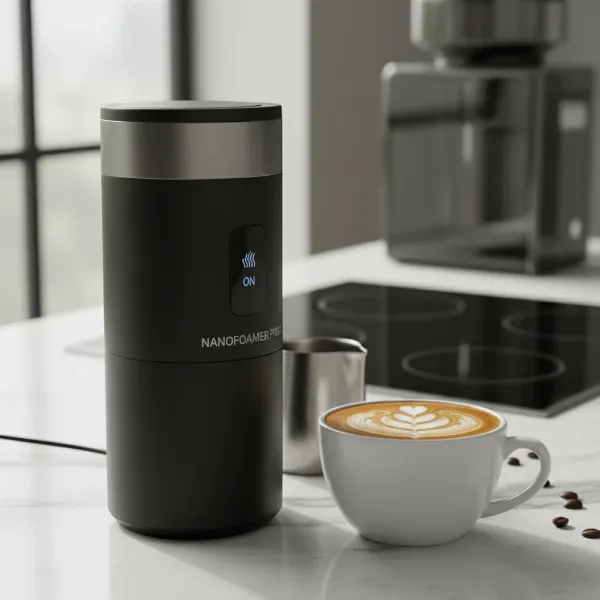
Every coffee lover dreams of crafting beautiful latte art—a delicate heart, an elegant rosetta, or an intricate swan adorning their morning brew. While the quality of your espresso and the freshness of your milk are undoubtedly crucial, one often-overlooked tool holds the key to unlocking stunning designs: the milk pitcher. This seemingly simple vessel is, in fact, an extension of the barista’s hand, directly influencing the texture of your microfoam and the precision of your pour. Choosing the right milk pitcher can transform your latte art from basic attempts into consistent, impressive creations.
What is a Milk Pitcher and Why is it Essential for Latte Art?
A milk pitcher, often called a frothing jug, is a specialized container designed to steam milk using an espresso machine’s steam wand. Its primary function is to create velvety, smooth microfoam—milk that is perfectly aerated with tiny, uniform bubbles, free from large, unruly ones. Unlike a regular kitchen jug, a well-designed milk pitcher is engineered with specific features that facilitate the controlled heating and aeration of milk, creating a stable “paint” essential for pouring intricate latte art designs. Without the correct pitcher, achieving the ideal microfoam and subsequent pouring control becomes significantly more challenging, if not impossible. The right pitcher doesn’t just hold your milk; it helps transform it into the silky texture and consistent temperature needed for true coffee artistry.
 Barista carefully pouring intricate latte art design into a coffee cup with a stainless steel milk pitcher.
Key Features to Look for in a Latte Art Milk Pitcher
Selecting the perfect milk pitcher involves considering several critical features that impact both the quality of your microfoam and your ability to execute precise latte art.
Spout Design: The Artist’s Brush
The spout of a milk pitcher is arguably its most important feature for latte art, acting like the tip of an artist’s brush. It dictates the precision and flow of the textured milk.
- Narrow/Pointed Spouts: These spouts are the go-to for intricate, high-detail patterns such as complex rosettas, delicate swans, and layered tulips. Their sharp, defined tip allows for a very fine, controlled stream of milk, giving baristas the precision needed to place lines exactly where they want them. If your ambition is to master advanced latte art techniques, a pitcher with a sharp, well-defined spout is indispensable.
- Rounded/Tulip Spouts: Ideal for beginners and for pouring bold, foundational patterns, rounded spouts allow for a larger, gentler flow of milk. This makes it easier to create the initial canvas and pour classic shapes like hearts and simpler tulips. The wider opening is more forgiving, helping you lay down a solid base of milk without disrupting the espresso’s crema. Many baristas find a moderately wide, tulip-shaped spout offers a great balance of control and forgiveness, making it excellent for learning and everyday pours.
|
Our Picks for the Best Milk steamer in 2026
As an Amazon Associate I earn from qualifying purchases.
|
||
| Num | Product | Action |
|---|---|---|
| 1 | SIMPLETASTE Milk Frother, 4-in-1 Electric Milk Steamer, Automatic Warm and Cold Foam Maker and Milk Warmer for Latte, Cappuccinos, Macchiato |

|
| 2 | SIMPLETASTE Milk Frother, 4-in-1 Electric Milk Steamer, Automatic Warm and Cold Foam Maker and Milk Warmer for Latte, Cappuccinos, Macchiato |
|
| 3 | Milk Frother, Paris Rhône 4-in-1 Milk Steamer and Frother, Hot & Cold Foam Milk Warmer with Temperature Control, Auto Shut-Off Frothers for Coffee, Latte, Cappuccino, Macchiato |
|
| 4 | Electric Milk Frother and Steamer, 16.9oz/500ml Milk Steamer and Frother for Latte, Dishwasher Safe, BPA Free, 4 Functions, Enjoy Perfect Milk Froth in 2 Min |
|
| 5 | HAUSHOF Milk Frother, 4-in-1 Electric Milk Frother and Steamer, Large Capacity, Hot Chocolate Maker, Automatic Warm and Cold Foam Maker for Coffee, Latte, Macchiato, Cappuccino |
|
| 6 | Large Electric Milk Frother and Steamer, 16.9oz/500ml Milk Steamer and Frother for Latte or Hot Chocolate, Dishwasher Safe, 6 Functions, Enjoy Perfect Milk Froth in 2 Min (White-Glass) |
|
| 7 | Milk Frother and Steamer, Large Capacity & Detachable Electric Milk Frother, Automatic Warm and Cold Foam Maker, Hot Chocolate Maker, Stainless Steel Jug, 30.44Oz./900ML |
|
| 8 | SIMPLETASTE Milk Frother, 4-in-1 Electric Milk Frother and Steamer, Automatic Warm and Cold Foam Maker and Milk Warmer for Latte, Cappuccinos, Dark Blue |
|
| 9 | Milk Frother, 4-in-1 Milk Frother and Steamer, 10.6oz Electric Milk Steamer, Automatic Cold and Hot Foam maker for Lattes, Cappuccinos, Ceramic Lining Interior (Polished) |
|
| 10 | Milk Frother, 4-in-1 Electric Milk Steamer, 350ml/11.8oz Automatic Frother Machine for Coffee, Warm and Cold Foam, Temperature Control for Latte, Cappuccino, Hot Chocolate |
|
Some pitchers also feature “hybrid” spouts that attempt to blend the benefits of both, offering versatility for a range of designs.
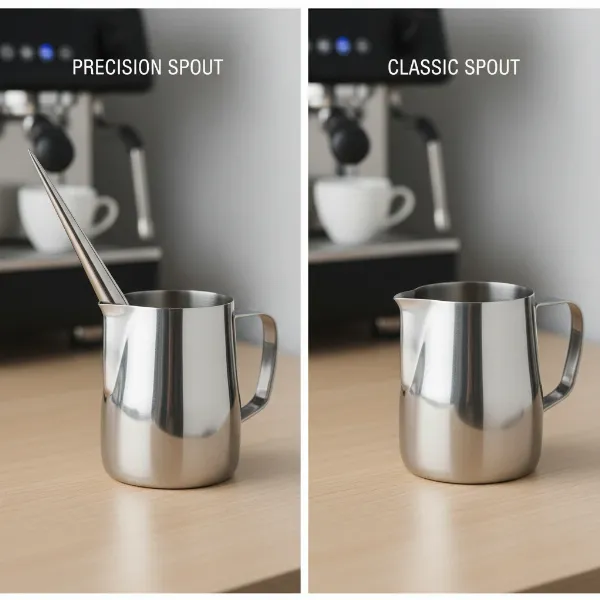 Two different stainless steel milk pitchers side-by-side, showcasing a narrow pointed spout and a wider rounded tulip spout.
Capacity and Size: Matching Your Brew Volume
The size of your milk pitcher significantly impacts your latte art success. A simple rule of thumb is to choose a pitcher that is roughly double the volume of the cold milk you plan to use, providing enough space for the milk to expand by about 30-40% during steaming without overflowing.
- 12 oz (350ml) Pitchers: This is an ideal size for a single small-to-medium drink, such as a 6-8 oz cappuccino or flat white. It’s also excellent for practicing latte art without excessive milk waste and is a common choice for home baristas.
- 15 oz (450ml) Pitchers: These mid-range pitchers are suitable for slightly larger single drinks or for baristas who find the 12 oz a bit too small for their detailed latte art work.
- 20 oz (550-600ml) Pitchers: Considered the most versatile size, 20 oz pitchers are perfect for standard lattes, larger drinks (10-12 oz), or for steaming enough milk to pour two smaller drinks at once. This size is popular for both home baristas seeking versatility and professional settings.
- 32 oz (1L) or Larger Pitchers: Generally used in commercial environments, these larger pitchers are essential for high-volume needs, such as batch steaming for multiple drinks in a busy cafe, improving workflow efficiency.
Material and Build Quality: Durability and Heat Control
The material and overall build quality of your milk pitcher play a vital role in its performance and longevity.
- 304 Stainless Steel: This is the most common and highly recommended material. 304-grade stainless steel is incredibly durable, resistant to rust and staining, and easy to clean. Crucially, it has excellent thermal conductivity, allowing baristas to accurately feel the temperature of the milk by touch as it heats up. This tactile feedback is essential for stopping the steaming process at the perfect moment, typically between 140-155°F (60-68°C), before the milk proteins break down and lose sweetness.
- Teflon-Coated: Some pitchers come with a non-stick Teflon coating. These are praised for their ease of cleaning and their ability to reduce milk waste due to less clinging. While effective, some baristas prefer the classic feel and heat feedback of uncoated stainless steel.
- Wall Thickness: Pitcher wall thickness can affect how quickly you perceive temperature changes. Medium-thickness walls generally offer a good balance, providing clear heat feedback without making the pitcher too flimsy or too slow to conduct heat.
Handle Ergonomics and Pitcher Balance
The handle and overall balance of the pitcher are critical for comfortable and controlled pouring, especially during intricate latte art.
- Ergonomic Handle: A comfortable, securely gripped handle allows for steady control and reduces wrist fatigue during repeated use. Different handle designs accommodate various grip styles, so finding one that feels right in your hand is important.
- Pitcher Balance: A well-balanced pitcher feels stable in your hand, allowing you to execute smooth, controlled movements. Poorly balanced pitchers can feel lopsided, making precise pouring more difficult. While most pitchers have handles, some handleless designs are available for those who prefer a different grip and pouring technique.
Choosing the Right Milk Pitcher for Your Skill Level
Your current latte art skill level can help guide your pitcher choice, as certain features lend themselves better to different stages of learning.
For Beginners: Focus on Forgiveness and Control
If you’re just starting your latte art journey, prioritize pitchers that offer a degree of forgiveness and ease of control. A pitcher with a rounded or tulip-shaped spout is often best, as it allows for a more generous and stable flow of milk, making it easier to pour foundational patterns like hearts and simple tulips. A 20 oz (550-600ml) capacity is a great all-rounder, providing enough room for milk expansion and practice without being overly cumbersome. Look for a pitcher made of 304 stainless steel for reliable heat feedback and easy cleaning.
For Intermediate Baristas: Refining Precision
As you move past the basics, you’ll likely want to refine your designs and explore more detailed patterns. An intermediate barista might benefit from a pitcher with a hybrid spout or one that is slightly more pointed than a basic tulip. This offers a balance between control for fills and precision for fine lines. Continuing with a 20 oz pitcher remains versatile, but some may opt for a 15 oz (450ml) for slightly more control over smaller volumes. Focus on a pitcher with excellent balance to support your developing pouring techniques.
For Advanced Latte Artists: Maximizing Intricacy
Experienced latte artists aiming for highly intricate designs like detailed swans, layered rosettas, or complex etched patterns will appreciate pitchers designed for maximum precision. A pitcher with a sharp, narrow spout is paramount for achieving razor-thin lines and crisp contrasts. Advanced baristas often experiment with various spout shapes and pitcher designs to match specific art styles. While size can vary, a 12 oz (350ml) pitcher might be preferred for single, highly detailed pours, offering maximum maneuverability.
Top Milk Pitchers for Pouring Latte Art
While specific brand recommendations can change, certain categories of milk pitchers consistently perform well for latte art, catering to different needs:
- Best All-Rounder: A well-balanced 20 oz (600ml) 304 stainless steel pitcher with a versatile, moderately sharp spout is often the top choice for most home baristas and cafes. It provides enough capacity for various drinks and allows for a wide range of latte art designs.
- Best for Beginners: Look for a 12-20 oz (350-600ml) 304 stainless steel pitcher with a forgiving, rounded or tulip-shaped spout. Ease of cleaning and a comfortable handle are also key.
- Best for Precision Art: For those chasing championship-level detail, a 12-15 oz (350-450ml) pitcher with a very sharp, narrow spout is essential. These pitchers often feature specialized designs for optimal flow control.
Tips for Mastering Your Milk Pitcher and Latte Art
Beyond choosing the right pitcher, technique and practice are paramount.
- Proper Milk Steaming: Always start with cold, fresh milk, filled to about halfway in your chosen pitcher. Position the steam wand just below the surface to incorporate air (the “stretching” phase), then submerge it slightly deeper to create a powerful vortex (the “texturing” phase) that evenly heats the milk and refines the microfoam.
- Feel the Temperature: With a stainless steel pitcher, rely on touch to gauge the milk’s temperature. Once the pitcher becomes too hot to comfortably hold, stop steaming.
- Swirl and Pour: Immediately after steaming, gently swirl the milk in the pitcher to ensure the microfoam is fully integrated and shiny. Pour with confidence, focusing on controlling the flow and angle to create your desired design.
- Practice Consistently: Latte art is a skill developed over time. Don’t be discouraged by imperfect pours; consistent practice is the only path to mastery.
Maintenance and Care for Longevity
Proper care extends the life of your milk pitcher and ensures hygiene.
- Clean Immediately: Always wipe down your milk pitcher with a damp cloth immediately after each use to prevent milk residue from drying and hardening.
- Thorough Washing: Wash the pitcher with warm, soapy water after your coffee session, or place it in the dishwasher if it’s dishwasher-safe. Ensure no milk film remains.
- Avoid Abrasives: Do not use abrasive scrubbers that could scratch the stainless steel or damage Teflon coatings.
- Storage: Store your pitcher in a clean, dry place.
Common Problems and Troubleshooting
Even with the best pitcher, challenges can arise.
- Milk Not Frothing Properly: This could be due to milk that isn’t cold enough, improper steam wand positioning (too shallow or too deep), or using the wrong size pitcher for the milk volume. Ensure your milk is fresh and very cold, and practice your stretching and texturing technique.
- Inconsistent Pour: If your latte art is inconsistent, check your pitcher’s balance, ensure your spout choice aligns with your desired design complexity, and focus on smooth, controlled wrist movements during the pour.
Conclusion
The journey to pouring exquisite latte art is a rewarding one, and the humble milk pitcher stands as a pivotal tool in this craft. Understanding the nuances of spout design, capacity, material, and ergonomics empowers you to choose a pitcher that truly complements your skills and aspirations. From creating a silky canvas of microfoam to delivering the final delicate flourish, the right milk pitcher is an indispensable companion for every barista. So, take the time to explore, experiment, and find the pitcher that feels like a natural extension of your artistry. What kind of latte art masterpiece will you create next?
Frequently Asked Questions
What is the best size milk pitcher for latte art?
The best size depends on your typical drink volume. A 12 oz (350ml) pitcher is ideal for single, smaller drinks and practice, while a 20 oz (550-600ml) pitcher offers more versatility for standard lattes or two smaller drinks. The general rule is to choose a pitcher roughly double the volume of cold milk you’ll be steaming.
Does the milk pitcher really affect latte art?
Absolutely. The milk pitcher significantly impacts latte art. Its spout shape dictates pouring precision, while its size and body design influence the quality and consistency of your microfoam, which are both crucial for creating clear, beautiful designs.
What kind of spout is best for intricate designs?
For intricate latte art designs like detailed rosettas, swans, and delicate tulips, a pitcher with a sharp, narrow, or pointed spout is best. This design allows for a very fine, controlled stream of milk, providing the precision needed for fine lines and complex patterns.
How do I keep my milk pitcher clean?
To keep your milk pitcher clean and hygienic, always wipe it immediately after each use with a damp cloth to remove milk residue. Then, wash it thoroughly with warm, soapy water or place it in a dishwasher if safe. Regular and immediate cleaning prevents milk from drying and hardening, which can affect future pours and hygiene.