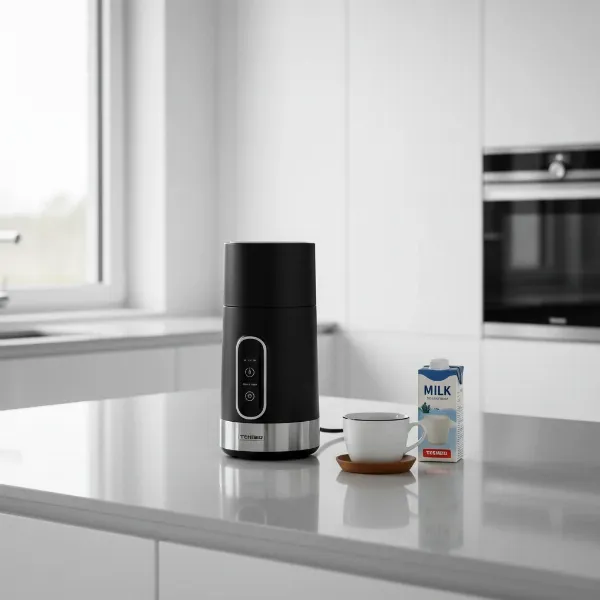
Imagine savoring a coffee drink at home, topped with luxurious, velvety microfoam that melts beautifully into your espresso, creating exquisite latte art. This is the hallmark of a truly great coffee experience. Yet, for many home baristas, this dream often turns into a struggle, yielding frustratingly large, soapy bubbles instead of that coveted silky texture. If you’ve ever wondered how cafes consistently produce that perfect milk, you’re in the right place. This guide will demystify the art and science behind achieving consistently smooth, glossy milk foam, transforming your home coffee creations from ordinary to extraordinary.
What is Silky Milk Texture (Microfoam)? Why It Matters
Silky milk texture, often referred to as “microfoam,” is characterized by tiny, uniform air bubbles that are so small they become virtually undetectable to the eye and palate. This creates a creamy, homogeneous liquid that pours like wet paint and integrates seamlessly with espresso, enhancing its sweetness and aroma. Unlike large, airy “soap bubbles” that quickly separate from the milk and lead to a dry, uneven drinking experience, microfoam remains stable, adding a delightful mouthfeel and allowing for stunning latte art designs like rosettas, hearts, and tulips. Mastering microfoam is not just about aesthetics; it’s about elevating the entire sensory experience of your coffee.
Understanding Your Tools: The Milk Steamer and Beyond
Achieving that perfect silky texture largely depends on your equipment and how you utilize it. While professional espresso machines with powerful steam wands are the gold standard, various tools can help you get closer to your ideal foam.
The Steam Wand (Espresso Machine)
|
Our Picks for the Best Milk steamer in 2026
As an Amazon Associate I earn from qualifying purchases.
|
||
| Num | Product | Action |
|---|---|---|
| 1 | SIMPLETASTE Milk Frother, 4-in-1 Electric Milk Steamer, Automatic Warm and Cold Foam Maker and Milk Warmer for Latte, Cappuccinos, Macchiato |

|
| 2 | Large Electric Milk Frother and Steamer, 16.9oz/500ml Milk Steamer and Frother for Latte or Hot Chocolate, Dishwasher Safe, 6 Functions, Enjoy Perfect Milk Froth in 2 Min (White-Glass) |
|
| 3 | HAUSHOF Milk Frother, 4-in-1 Electric Milk Frother and Steamer, Large Capacity, Hot Chocolate Maker, Automatic Warm and Cold Foam Maker for Coffee, Latte, Macchiato, Cappuccino |
|
| 4 | Electric Milk Frother and Steamer, 16.9oz/500ml Milk Steamer and Frother for Latte, Dishwasher Safe, BPA Free, 4 Functions, Enjoy Perfect Milk Froth in 2 Min |
|
| 5 | Milk Frother, 4-in-1 Electric Milk Steamer, 350ml/11.8oz Automatic Frother Machine for Coffee, Warm and Cold Foam, Temperature Control for Latte, Cappuccino, Hot Chocolate |
|
| 6 | Milk Frother, 4-in-1 Milk Frother and Steamer, 10.6oz Electric Milk Steamer, Automatic Cold and Hot Foam maker for Lattes, Cappuccinos, Ceramic Lining Interior (Polished) |
|
| 7 | SIMPLETASTE Milk Frother, 4-in-1 Electric Milk Frother and Steamer, Automatic Warm and Cold Foam Maker and Milk Warmer for Latte, Cappuccinos, Dark Blue |
|
| 8 | Milk Frother, Paris Rhône 4-in-1 Milk Steamer and Frother, Hot & Cold Foam Milk Warmer with Temperature Control, Auto Shut-Off Frothers for Coffee, Latte, Cappuccino, Macchiato |
|
| 9 | SIMPLETASTE Milk Frother, 4-in-1 Electric Milk Steamer, Automatic Warm and Cold Foam Maker and Milk Warmer for Latte, Cappuccinos, Macchiato |
|
| 10 | Milk Frother and Steamer, Large Capacity & Detachable Electric Milk Frother, Automatic Warm and Cold Foam Maker, Hot Chocolate Maker, Stainless Steel Jug, 30.44Oz./900ML |
|
The steam wand attached to an espresso machine is the most effective tool for creating true microfoam. It introduces high-pressure steam into the milk, simultaneously heating and aerating it to create a fine, velvety texture. This method offers the most control over aeration and incorporation, making it the preferred choice for baristas and serious home enthusiasts aiming for latte art quality.
Automatic Milk Frothers
Automatic milk frothers are convenient, push-button devices that heat and froth milk to a consistent, pre-set texture. They are excellent for daily use, providing a thick, creamy foam with minimal effort. While many modern automatic frothers can produce a decent microfoam, they typically offer less control over the specific bubble size and texture needed for advanced latte art compared to a steam wand.
Handheld Frothers & Manual Methods
Handheld battery-operated frothers, French presses, or even a simple whisk can create foam by incorporating air into heated milk. These methods are affordable and accessible, suitable for those who need basic foam for cappuccinos or hot chocolates. However, achieving the fine, integrated texture of true microfoam with these manual tools is considerably more challenging, often resulting in larger, less stable bubbles.
Table: Frothing Methods & Texture Quality
| Feature | Steam Wand (Espresso Machine) | Automatic Frother | Handheld Frother/Manual |
|---|---|---|---|
| Texture | Silky microfoam, ideal for latte art | Consistent foam, often creamy, sometimes less silky | Airy, larger bubbles, less stable |
| Control | High (aeration, temperature, swirl) | Low (pre-set programs) | Moderate (manual movement) |
| Complexity | High (requires skill and practice) | Low (push-button operation) | Medium (technique-dependent) |
| Cost | High (integrated with espresso machine) | Medium (standalone appliance) | Low (affordable tools) |
| Best For | Baristas, latte art, professional cafes, dedicated home users | Convenience, daily drinks, consistent foam for basic beverages | Basic foam, occasional use, budget-conscious users |
The Science of Silky Milk: Protein, Fat, and Temperature
Understanding the fundamental elements that contribute to milk frothing is key to mastering microfoam. Milk’s composition, particularly its protein and fat content, plays a crucial role, alongside the precise temperature at which it is steamed.
Role of Proteins
Milk proteins, primarily casein and whey, act as natural surfactants. When steam or air is introduced, these protein molecules unfold and rearrange themselves around the newly formed air bubbles, creating a stable, flexible “scaffold.” This protein structure is what gives the foam its integrity and prevents the bubbles from collapsing quickly. The higher the protein content, generally the more stable and voluminous the foam can be.
Role of Fats
Fats in milk contribute significantly to the creaminess, richness, and mouthfeel of microfoam. They add viscosity to the milk, helping to create a denser, more luxurious texture that feels velvety on the tongue. While some fat is essential for this creamy quality, too much can actually weigh down the foam, making it harder to create and less stable. A balanced fat content, typically found in whole milk, provides the ideal foundation for silky microfoam.
Ideal Temperature
Temperature control is perhaps the most critical factor. The optimal temperature range for steaming milk to achieve the best flavor and texture is between 60-65°C (140-150°F). Within this range, the milk’s natural sugars (lactose) reach their peak sweetness, and proteins are perfectly denatured to create stable foam without scorching the milk. Overheating milk beyond 70°C (160°F) will scald it, causing the proteins to denature excessively, resulting in a thin, watery foam that separates quickly and has an unpleasant cooked taste. Conversely, underheated milk will not develop sufficient volume or stability.
 A barista expertly steaming milk with a steam wand, creating silky microfoam in a stainless steel pitcher, ideal for latte art.
Choosing the Right Milk for Microfoam
The type of milk you choose profoundly impacts your ability to create silky microfoam. Not all milks are created equal when it comes to frothing.
Dairy Milk
- Whole Milk: Often considered the “gold standard” for frothing, whole milk (with approximately 3.5-4% fat and ample protein) offers the ideal balance of fat and protein. Its composition allows for the creation of a rich, creamy, and stable microfoam that is perfect for latte art and indulgent textures. It’s also forgiving for beginners, making it easier to achieve consistent results.
- Reduced-Fat/Skim Milk: While skim milk contains a higher protein-to-fat ratio, allowing it to whip up quickly into voluminous foam, the bubbles tend to be larger and less stable. This results in an airier, less silky foam that separates faster, making it better suited for drinks like macchiatos where a thick, dry foam is desired rather than microfoam.
Non-Dairy Milk
The world of non-dairy milks has evolved, with many brands now offering “barista blends” specifically formulated for frothing.
- Oat Milk (Barista Blend): This has emerged as an excellent alternative, widely praised by baristas for its ability to produce a silky, stable microfoam very similar to dairy milk. Barista-blend oat milks often contain added fats and stabilizers that help mimic the frothing properties of whole milk, resisting curdling and separation.
- Soy Milk: Soy milk can froth well due to its protein content, but it requires careful handling. It has a tendency to split or curdle when exposed to high heat or acidic coffee, so stretching it gently and avoiding overheating are crucial. Some find adding a tiny bit of bicarbonate soda mixed with water can help prevent splitting.
- Almond Milk: Generally, almond milk produces a lighter, less dense foam with larger bubbles compared to oat or whole milk. Its lower protein and fat content make it challenging to achieve a truly silky microfoam, though barista blends can offer improved results.
Mastering the Steam Wand Technique (Step-by-Step)
Achieving velvety microfoam with a steam wand is a learned skill that involves precision and practice. Here’s a step-by-step guide to perfecting your technique:
1. Preparation
- Cold Milk: Always start with fresh, very cold milk. Cold milk provides more time to introduce air before the milk overheats, giving you better control over the texture.
- Clean Pitcher: Use a cold, clean stainless steel milk pitcher. Fill it to just below the spout begins, typically about one-third full, to allow room for expansion.
- Purge the Wand: Before inserting the steam wand into the milk, briefly open the steam valve to purge any condensation or stale water trapped inside. This ensures you’re only introducing dry, powerful steam.
2. Aeration (Stretching)
This is the phase where you introduce air into the milk to create initial volume.
- Position the Wand: Submerge the tip of the steam wand just beneath the surface of the milk, slightly off-center. Angle the pitcher slightly to encourage a gentle whirlpool motion.
- Turn on Steam: Open the steam valve to full power.
- Listen for the “Chirp”: Slowly lower the pitcher (or raise the wand) until you hear a soft, consistent “chirping” or “tss-tss” sound, similar to paper ripping. This sound indicates that air is being introduced in tiny, controlled increments. If you hear a loud, sputtering sound, the wand is too high; if there’s no sound, it’s too deep. Adjust accordingly.
- Expand Volume: Continue this aeration phase for only a few seconds, expanding the milk’s volume by about 15-20% (for lattes/flat whites) or a bit more for cappuccinos. Stop aeration before the milk gets too warm (around 30-40°C / 80-100°F).
3. Incorporation (Texturing/Rolling)
Once you’ve introduced enough air, the goal is to incorporate it uniformly throughout the milk, breaking down large bubbles and creating that glossy, wet-paint consistency.
- Submerge the Wand: Lower the steam wand deeper into the milk, submerging the tip completely.
- Create a Whirlpool: Maintain the angle of the pitcher to create a strong, consistent whirlpool effect. This motion folds the air into the milk, breaking down larger bubbles and integrating the microfoam evenly. The milk should be spinning smoothly, without splashing or large bubbles forming on the surface.
4. Temperature Check
- Feel the Pitcher: Continue texturing until the pitcher becomes too hot to comfortably hold in your hand (around 60-65°C / 140-150°F). This tactile method is often more intuitive than a thermometer for experienced baristas.
- Stop Steaming: Immediately turn off the steam valve once the optimal temperature is reached. Overheating is a common mistake that ruins texture and sweetness.
5. Finishing Touches
- Tap the Pitcher: Gently tap the bottom of the pitcher firmly on the countertop once or twice to pop any remaining larger surface bubbles.
- Swirl and Pour: Swirl the milk vigorously in the pitcher to fully integrate the microfoam with the liquid milk. It should look glossy and homogenous, like melted white paint. Pour immediately into your espresso for the best results and latte art potential.
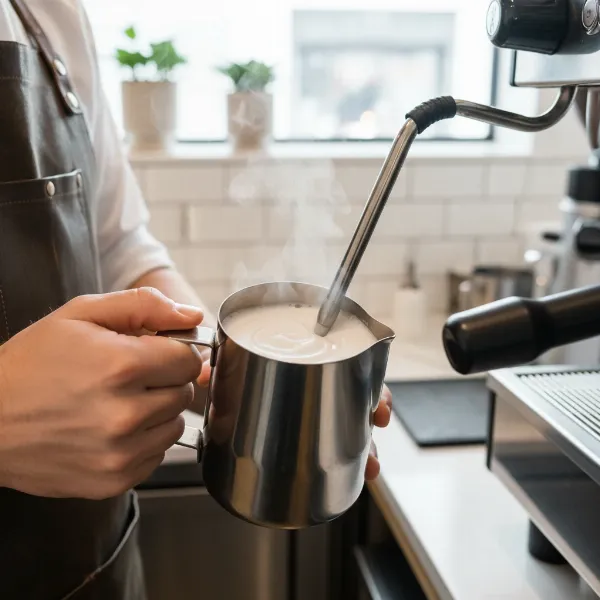 Close-up view of milk being steamed in a pitcher, showing the whirlpool effect and fine microfoam formation, highlighting proper technique.
Common Mistakes Preventing Silky Texture & How to Fix Them
Many aspiring home baristas encounter similar challenges when trying to achieve microfoam. Recognizing and correcting these common mistakes is crucial for success.
- Too Much Air: This is the primary culprit behind large, “soap-like” bubbles. If you aerate for too long or keep the wand too high, you introduce too much air, creating a stiff, dry foam that quickly separates.
- Fix: Reduce the aeration time. Aim for just a few seconds of the “chirping” sound, focusing on only a small increase in milk volume. Submerge the wand quicker to start the incorporation phase.
- Not Enough Air: Conversely, if the milk stays flat and watery, you haven’t introduced enough air.
- Fix: Ensure the steam wand tip is consistently at the surface of the milk during the aeration phase, creating that distinct “chirping” sound. Slightly adjust the depth until you hear it.
- Overheating: Scalded milk tastes unpleasant, loses its natural sweetness, and results in a thin, broken texture where the foam separates quickly.
- Fix: Always stop steaming when the pitcher is too hot to touch (60-65°C). Use a thermometer if you’re unsure, and be mindful of the temperature.
- Dirty Steam Wand: Blocked steam wand holes due to dried milk residue can significantly affect steam pressure and consistency, making it impossible to create good foam.
- Fix: Purge and wipe your steam wand immediately after every use. For deeper cleaning, unscrew the steam tip and soak it in a descaling solution or use a thin tool (like a paper clip) to clear any blockages regularly.
- Inconsistent Technique: If your results vary wildly from one cup to the next, it’s likely due to inconsistencies in your approach.
- Fix: Practice. Focus on replicating the exact same steps each time: same milk quantity, same wand position, same aeration duration, same temperature target. Consistency is key to mastery.
Tips for Success and Troubleshooting
Beyond the core technique, a few additional tips can greatly improve your chances of success and help you troubleshoot persistent issues.
- Start with Very Cold Milk: The colder the milk, the more time you have to stretch and texture it before it overheats. This extended working time allows for finer control over bubble integration.
- Use a Stainless Steel Pitcher: Stainless steel pitchers conduct heat well, allowing you to gauge the milk’s temperature accurately by touch. Their specific spout designs are also ideal for pouring latte art.
- Practice with Water and Dish Soap: If you’re struggling with the steam wand technique, practice with water and a tiny drop of dish soap. This allows you to visualize the whirlpool effect and aeration without wasting milk. The soapy water will also create a foam, giving you a visual cue for proper technique.
- Clean Your Steam Wand Immediately: This cannot be stressed enough. Dried milk creates blockages that hinder steam flow and hygiene. A quick purge and wipe after each use are paramount.
- Don’t Be Afraid to Experiment with Different Milk Brands: Even within the “whole milk” or “oat milk barista blend” categories, brands can vary in their protein and fat content, affecting frothing performance. If one brand isn’t working for you, try another.
- Be Patient and Persistent: Creating perfect microfoam is a skill that takes time and practice to develop. Don’t get discouraged by initial failures; each attempt is a learning opportunity. Pay attention to the sounds, the feel of the pitcher, and the appearance of the milk.
Conclusion
The journey from large, soapy bubbles to silky, luscious microfoam is a rewarding one that transforms your home coffee experience. By understanding the critical role of milk proteins and fats, maintaining the ideal temperature, and mastering the precise aeration and incorporation techniques with your milk steamer, you can consistently achieve cafe-quality results. Remember to start with cold milk, clean your equipment diligently, and most importantly, practice. The tactile feedback of a perfectly heated pitcher and the visual satisfaction of glossy, integrated microfoam are unparalleled. With dedication, you’ll soon be pouring beautiful latte art and enjoying beverages that rival your favorite coffee shop. What silky-smooth coffee creation will you master first?
Frequently Asked Questions
What kind of milk is best for silky texture?
For the most reliable silky texture, whole dairy milk with 3.5-4% fat and high protein content is generally considered ideal. Among non-dairy options, barista-blend oat milk is highly recommended for its excellent frothing properties, producing a consistent and creamy microfoam. Both types offer the necessary balance of fats and proteins to create stable, velvety bubbles for perfect coffee drinks.
Can I get silky milk with an automatic frother?
Many modern automatic frothers can produce a very good, consistent foam that is creamy and pleasant for daily beverages. However, achieving the extremely fine, pourable microfoam required for intricate latte art is typically more challenging with automatic frothers compared to the precise control offered by a traditional espresso machine’s steam wand. For convenience and decent foam, they are excellent, but for true barista-level silky texture, a steam wand is preferred.
How do I know when the milk is hot enough?
The ideal temperature for silky milk is between 60-65°C (140-150°F). A reliable way to tell without a thermometer is by touch: stop steaming when the milk pitcher becomes too hot to comfortably hold in your hand for more than a few seconds. If you’re unsure, a milk thermometer can provide precise readings until you develop a confident feel for the optimal temperature, preventing scalding and preserving the milk’s sweetness and texture.